When you ask how much bookkeeping costs, you’re usually trying to answer a larger question: what will it take to keep the books organized without adding more work to your week?
A useful quote should answer both.
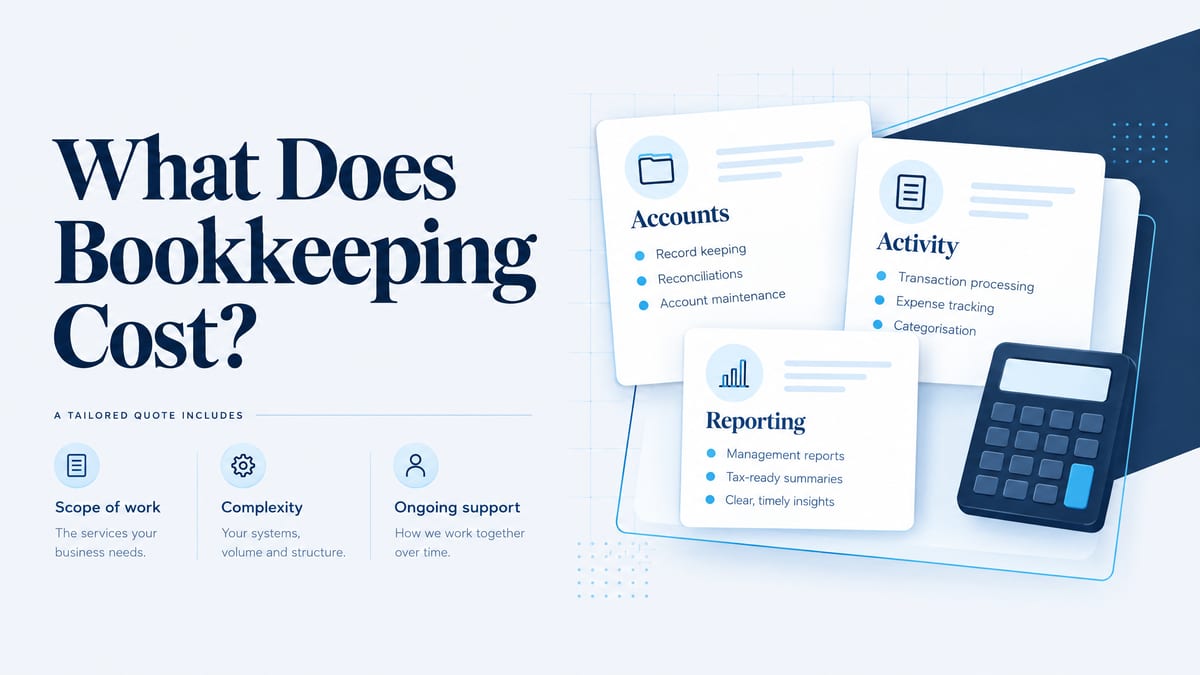
Bookkeeping costs for a small business depend on the work included, the condition of the records, and how much support the business needs. Two companies with similar revenue can require very different amounts of bookkeeping.
Before comparing prices, compare responsibilities. Who records transactions? Who reconciles accounts? Who follows up on missing information? What reports will you receive, and will someone explain them?
At AMX, we discuss those needs before defining an engagement. This guide explains what to look for in a quote without assuming that one package or price fits every business.
Start with the work you need covered
“Bookkeeping” can describe a narrow set of tasks or a much broader ongoing role.
One arrangement might include transaction recording and bank reconciliations. Another might also include customer invoicing, vendor bills, payroll coordination, and monthly reporting.
Those are different scopes.
Write down the tasks you want help with before requesting a proposal. Be specific about work you expect to keep internally.
For example, you may want your office manager to approve bills while a bookkeeper records them and prepares payment information. Or you may handle customer collections yourself but need a reliable list of overdue invoices.
Clear responsibilities make the quote easier to evaluate and the working relationship easier to manage.
Transaction volume is only part of the picture
The number of transactions matters, but their complexity matters too.
Consider two fictional businesses.
A consultant receives a small number of client payments and pays recurring operating expenses from one checking account. A retailer records daily sales through several channels, processes refunds, carries inventory, and receives deposits reduced by processing fees.
Even if their monthly bank transaction counts look similar, the work required to explain and review those transactions can be different.
Ask how a provider defines transaction volume. Does a processor deposit represent one transaction in the quote, or does the underlying sales activity affect the scope?
You don’t need to learn every technical detail. You do need to understand what information the estimate assumes.
More accounts can mean more review
Tell the provider about all bank accounts, credit cards, loans, and payment platforms used by the business.
Each can introduce additional statements, transfers, and balances to review. Accounts that appear inactive may still need attention if they contain outstanding items or occasional charges.
Multiple business entities can also require separate records and additional coordination.
A quote based on one company and two accounts may need to change if the work actually involves several companies and shared expenses. Discuss that structure early so the proposal reflects the business you operate.
The condition of your books affects the starting work
Ongoing monthly bookkeeping and correcting a backlog are different projects.
If several months are incomplete, the provider may need to review old statements, identify missing activity, investigate balances, and coordinate with your CPA before the monthly routine begins.
Ask whether setup or catch-up work is included, separately priced, or subject to an initial review.
Also ask how unexpected problems will be handled. A proposal should make it clear whether additional work requires approval.
An initial estimate may change when incomplete records reveal issues that weren’t visible at the start. What matters is having a clear process for discussing that change.
Reporting and support should be defined
Receiving a report and understanding a report are different services.
Ask which financial statements are included, how often they are prepared, and whether you have time with someone to discuss the results.
You may need basic monthly statements. You may also need department reporting, project information, cash-flow forecasts, or controller support.
Be clear about the business decisions you want the reports to support. “I need to understand why cash feels tight despite strong sales” gives a provider a more useful starting point than “I need better reports.”
AMX offers financial reporting and forecasting alongside bookkeeping. The scope should reflect which of those services you need.
Understand how the fee works
You may encounter hourly pricing, a recurring monthly fee, or a fixed price for a defined project.
With hourly pricing, ask what work is covered, how time is tracked, and whether you can set an approval point before additional hours are incurred.
With a monthly fee, ask about the assumed account count, transaction activity, reports, and support. Find out what would cause the scope or fee to change.
With project pricing, clarify the period covered, deliverables, exclusions, and treatment of missing information.
No structure removes the need for a clear agreement. A predictable fee is useful only when you understand what it includes.
Compare the full cost of each option
A provider’s invoice may not represent the entire arrangement.
Ask whether accounting software subscriptions are included. Clarify charges for setup, historical corrections, additional reporting, payroll-related work, or support outside the agreed scope.
Consider the time your team will still spend collecting records, approving payments, and answering questions. Outsourcing bookkeeping doesn’t remove the need for business input.
If you’re comparing outsourcing with hiring, look beyond a salary figure. Recruitment, training, supervision, coverage, and the actual workload all affect the decision.
That comparison doesn’t automatically favor one option. It helps you choose an arrangement that matches your needs.
Bring these questions to the proposal review
Before accepting a quote, ask:
- Which tasks are included, and which stay with us?
- What assumptions support the price?
- Is cleanup or onboarding separate?
- What reports will we receive?
- Who answers our questions?
- How are additional charges approved?
- How can we access and export our records if the arrangement ends?
Ask for answers in writing. That gives both sides a useful reference when the work begins.
Be cautious about comparing proposals only by their headline fees. A lower price for fewer responsibilities is not necessarily a better or worse choice; it is a different scope.
Prepare for a more useful pricing conversation
Bring a list of your accounts, software, payment systems, and the last month you believe is complete.
Explain whether you have employees, inventory, multiple entities, or overdue bookkeeping. Describe the work consuming your time and the information you wish you had.
You don’t need perfect records to start that conversation. You need an honest description of the current situation.
AMX supports New Jersey businesses with bookkeeping and related financial operations. We can discuss the tasks you need covered and what a suitable scope would involve.
Schedule a free consultation to talk through your bookkeeping needs and the information needed for a meaningful quote.