
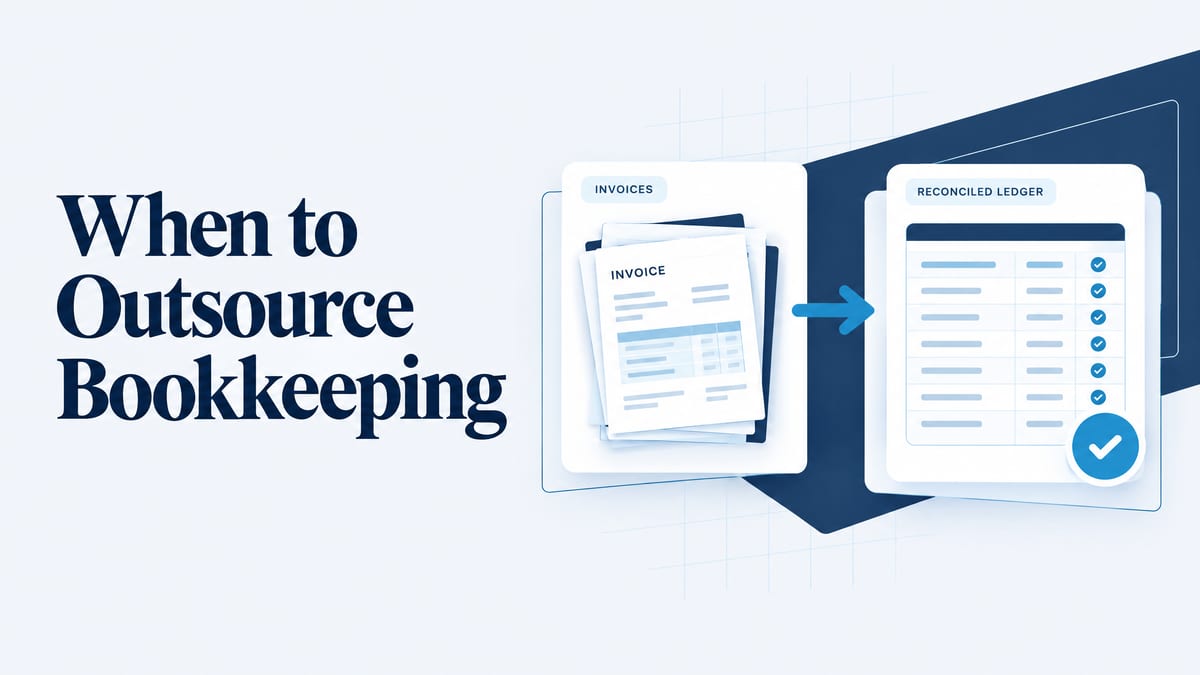
Bookkeeping often begins as something you handle between everything else. You send invoices, categorize transactions, and check the bank balance when you have a spare evening.
That arrangement may work for a while. As the business changes, the same routine can become harder to maintain.
The decision to outsource bookkeeping isn’t based on one revenue threshold or a specific number of employees. It depends on whether the current process gives you accurate, timely records without relying on effort your team can no longer sustain.
At AMX, we support New Jersey businesses with ongoing bookkeeping and controller-related work. Here’s how to decide whether outside support fits your situation and what to consider before making the change.
Look at the process you have now
Start with a straightforward review of how bookkeeping gets done.
Who collects the records? Who records transactions? Who reconciles accounts? Who checks the reports and answers questions from the CPA?
Then ask whether those responsibilities happen consistently.
A process can look complete on paper while depending on one person staying late every month. It can also work well with a small internal team if the responsibilities are clear and the workload is manageable.
The question is whether your arrangement works reliably for the business you have today.
Sign 1: The work repeatedly falls behind
One difficult month doesn’t necessarily mean you need to outsource. A recurring backlog deserves attention.
If statements remain unreconciled, invoices aren’t updated, or financial reports arrive too late to help with decisions, identify why.
You may have enough people but an unclear process. You may need software training. Or you may simply have more work than the available time allows.
Outside bookkeeping support can address a capacity gap, but it still needs a reliable flow of records and answers from your business.
Before choosing a provider, be honest about both sides of the problem: the work that needs doing and the information your team needs to supply.
Sign 2: Your reports raise questions no one can answer
You might have a profit and loss statement but still be unsure why cash is tight. You may see unfamiliar balances or expenses appearing in inconsistent categories.
Those questions are a reason to review the process behind the reports.
If your team can record activity but struggles to reconcile accounts or explain the financial statements, you may need support that includes review and reporting.
Ask prospective providers what happens after the reports are prepared. Will someone walk through significant changes? Who investigates an unexpected balance?
AMX’s financial reporting services focus on preparing information and helping owners understand it. That level of support should be discussed explicitly rather than assumed.
Sign 3: Bookkeeping is displacing other necessary work
Track how much time bookkeeping takes over a normal month. Include finding documents, correcting entries, answering questions, and preparing information for your CPA.
Then consider what gets delayed when you do that work.
This doesn’t mean every hour an owner spends on bookkeeping is wasted. Understanding your finances is part of running the business. The issue is whether recurring administration leaves too little time for responsibilities that require your attention.
Consider this fictional example: a construction business owner spends several evenings sorting card charges and identifying which project each purchase belongs to. The work keeps getting postponed, and project information arrives late.
That owner may benefit from bookkeeping support combined with a better way to capture purchase details when the spending happens. Outsourcing alone won’t supply information that was never recorded.
Sign 4: The business has become more complicated
New payment channels, employees, inventory, financing, or additional entities can change the bookkeeping workload.
A routine built around one bank account may no longer fit.
Before hiring help, list what changed. Explain how money enters the business, how purchases are approved, and what reports you need.
Look for relevant capability rather than the broadest service list. A business with inventory needs different support from a consultant with a few monthly invoices.
AMX’s services include bookkeeping, payables and receivables, inventory support, software consulting, and related financial operations. The right engagement depends on which tasks your business needs.
Compare three workable arrangements
Keeping bookkeeping in-house can make sense when the workload is manageable and your team has the time and knowledge to complete it.
A hybrid arrangement divides responsibilities. Your staff might collect records and approve invoices while an outside bookkeeper handles reconciliations and reporting.
A broader outsourced arrangement may include more of the recurring work, such as transaction recording and support for payables or receivables.
None of these removes the owner’s responsibility to understand the business and approve important decisions.
Choose based on the work, the available people, and the level of support required. You don’t need to transfer every task to benefit from outside help.
Define responsibilities before handing over access
A clear handoff starts with a written scope.
Identify who supplies documents, answers questions, approves payments, follows up with customers, and reviews reports. Agree on how missing information is flagged.
Discuss software access and account ownership. Where the system supports it, use appropriate individual access rather than casually sharing a main login. Confirm permissions with the provider and the software’s current guidance.
Ask how records will be transferred or exported if the arrangement changes.
Also clarify review responsibilities. Recording a payment, approving it, and releasing funds are different actions. Your process should make those distinctions clear.
Prepare for the transition
Tell the provider which month was last completed and whether any balances or transactions remain unresolved.
Gather account information, recent statements, existing reports, and relevant notes from your CPA. Explain ongoing routines and upcoming deadlines.
Avoid having two people independently process the same transactions during the handoff. Agree on the point where responsibility changes and how work in progress will be checked.
If catch-up work is needed, separate that starting project from the ongoing monthly arrangement. This makes deliverables and expectations easier to understand.
Decide what successful support looks like
Set practical expectations you can review.
You might want accounts reconciled on an agreed schedule, fewer unresolved transaction questions, a clear list of overdue customer balances, or monthly reports discussed with someone who can explain them.
Those are more useful measures than assuming outsourcing will automatically reduce costs or increase profits.
Schedule a review after the first completed reporting cycles. Discuss what is working, what information arrives late, and whether the scope needs adjustment.
Take the next step with a clear picture
If your current process works consistently, you may not need to change it.
If the books repeatedly fall behind, reports remain unclear, or the workload has outgrown your team’s capacity, outside support is worth discussing.
Start with the tasks causing difficulty. You can then compare an internal fix, a hybrid arrangement, and a broader bookkeeping engagement.
Schedule a free consultation with AMX. Tell us how the work gets done today, and we can discuss where additional support may help.